Pages

Showing posts with label Operations. Show all posts

02 May 2013

Surface Operations Qualified? Maintaining qualifications in a time of uncertainty

By Daren Lewis

Shipmates,
As you likely know we will not have the Navy for Rose Festival and therefore no Naval Vessel Protection Zone (learn more about NVPZs). We will still have a Safety Zone for the Dragon Boats. In addition we are facing reduced operational funding for the fiscal year.

I know some members rely on the high operations tempo of Rose Festival to complete the annual 12 hours of surface operational time required to maintain crew and coxswain qualifications. In light of the Fleet Week change and other uncertainty I encourage you to think about how you will get your on-the-water time for 2013. Plan ahead and don't get caught short.

All that said, everything I hear says there is still a commitment to Auxiliary surface operations. We are an important component of the operational community. The challenges we are seeing are the same ones being faced by all our Coast Guard shipmates. All units are seeing changes in tempo and funding.

14 April 2013

Division Member Training: Operations Workshop

By Daren Lewis

We had a great Operations workshop on Saturday 13APR2013. The workshop included:

  • A presentation by Randy Henry of the Oregon State Marine Board. He briefed us on the changing state of boating in Oregon, the OSMB strategic plan, and answered our questions. Mr. Henry serves as the Oregon Boating Law Administrator.
  • A presentation by our own Kurt Torgerson on petroleum and oil spills. 
  • The annual one-hour TCT refresher conducted by Ken Babick, DCDR7.
  • The annual operations workshop presented by Ken Babick, DCDR7.
  • Comments from MSU Portland Executive Officer, CDR Williamson.


04 December 2011

PHOTO OF THE WEEK

Post by: FSO-PB Jonathan James

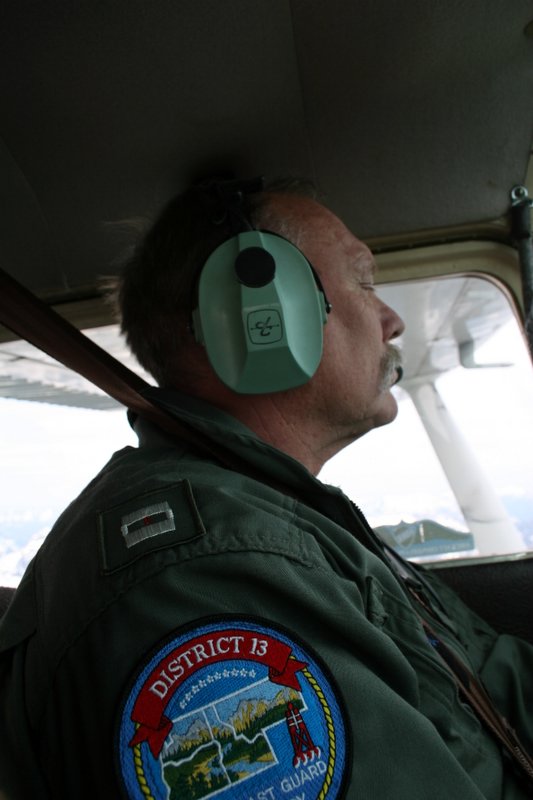
This week's photo was submitted by Paul Ploeger from AIXAIR piloted by Aircraft Commander Rick Williams on Saturday, November 12, 2011.


Portland, OR- AUXAIR conducts an overflight of an overturned vessel on the
Multnomah Channel. AUXAIR provided support to the Coast Guard RB-S from Coast Guard Station Portland, which including a check for possible people in the water as well as a check for pollution that my be leaking from the overturned vessel. AUXAIR conducts muliti mission flights to augment AIRSTA Astoria aircraft on the Columbia and Willamette Rivers.

27 November 2011

PHOTO OF THE WEEK

Post by FSO-PB Jonathan James

Happy Holidays shipmates. I hope you all had a wonderful and safe Thanksgiving with family and friends this past week. With Thanksgiving behind us brings our next big operation, Christmas Ships.

I just want to remind all our members underway for these parades to remember risk management, situational awareness and watch out for the safety of their fellow shipmates while underway.

Coast Guard Cutter Bluebell underway for Christmas Ships.USCGC Bluebell participates in the Willamette Fleet of Portland Christmas Ships
AUX Daren Lewis, USCG. Camera: Canon EOS 5D Mark II


20 September 2010

Multnomah County ARES Exercise

Members, we have an opportunity to participate in the Multnomah County ARES (Amateur Radio Emergency Service) exercise on 09 Oct. 2010. This event will exercise the use of HAMS and the amateur radio bands in the event of an emergency. The participants will include, city and county emergency services and first responders.

We will be participating with the use of our ECP (Emergency Command Post) on top of Mt. Tabor. We will be on the air from 0800 to 1300 (last known time). Operations will include the Marine VHF-FM, Amateur-2 meter, Amateur HF, and possibly trying to call COMSPAC (USCG Communications Area Master Station Pacific) on HF.

If you are planning to participate in the communications exercise 16 Oct., with your ACU but would like to get some hands on use of the ECP, this is the perfect opportunity to do so.

If you would like to participate, please contact our FSO-CM Paul Ploeger. He will be in contact with the event officer, Jim Price and will forward any updates to you.

Depending on interest for this event, we may need to set up a schedule to allow members to participate without overcrowding the ECP.

Posted for FSO-CM Paul Ploeger, picture by Daren Lewis

14 September 2010

Changes to Ops & Position.

Shipmates, we have a new change with our ops and position reports to Station Portland. Up until now Statute miles was our means of identifying our location when giving our ops and position report. We have now been asked by station to identify our location by using landmarks or geographical location when making our reports. By doing this it allows us to streamline our operations with the goldside who have been using this method throughout the nation. It also allows the station's watchstander to better task us when SAR cases arise. Station trains using landmarks and therefore has a better understanding of our position when using landmarks for references.

I know this is going to be hard for some to change to this new method of reporting being this is how we have done it for years, but we have to make the best of it. I know we will help each other out as a team. I would like to remind members that correcting this new change should be done via land line. The radio is not the place to inform or remind members of the change.

Another allowable method of location can be LAT. & LONG. Use this when you are unsure of any landmarks or your geographical location. You will notice this is the method that the aircraft use.

Let us take a look at the old method of ops and position and then the new.

STATION: AUX123, this is Station Portland on 83A, request ops and position, over.
AUX: Station, AUX123, ops normal, down bound, Columbia River mile 109, over.

The new method of reporting would be.

STATION: AUX123, this is Station Portland on 83A request ops and position, over.
AUX: Station, AUX123, ops normal, down bound, position, 42nd Street Boat Ramp, over.

I will have a new radio script out in the next week or two with the changes. In the meantime, please see that you make the changes to your current script.

If you have any questions about this change, please contact FSO-CM Paul Ploeger or SO-CM Jonathan James. We are both happy to help you through this transition and to answer any of your question.


Add Image

25 March 2010

YOUR COMMUNICATIONS "IMAGE" (And What it Implies about Your Capabilities)


Coast Guard SAR controllers are sometimes hesitant about assigning an unfamiliar Auxiliary boat (OPFAC) to a case. They may know very little about the operational characteristics and capabilities of the OPFAC to which they are talking. Up to date facility characteristic reports are not always readily available to those who need them the most, the duty SAR controllers.

"The training, experience, initiative
and judgment factors vary widely
among Auxiliarists"

Importantly, Coast Guard controllers have to consider other non-uniformity issues with respect to OPFAC and crews. Here we refer not to the vessels or its hardware, but to the training, experience, initiative and judgment of its skipper and crew. The Auxiliary's Boat Crew Qualification Program has gone a long way towards standardizing the training factor in the above list of personnel related concerns. But the experience, initiative and judgment factors remain highly variable among Auxiliary coxswains and crew members. This is only to be expected whenever the minimum annual requirement of a qualification is set so low.

"Like it or not, the image you present
through your comms is often the only
thing Coast Guard controllers can use
to sizeup your capabilities."

Why is that? Well, under normal circumstances, they will never see Brian Rollins' OPFAC or John Pulson's OPFAC to see that they are squared away OPFACs.
They won't get a chance to see that your crew members are sharply attired in their required uniforms and PPE, and that all members are in the same uniform.

In many cases, their entire impression on the capabilities of your vessel and crew will be made on the basis of how you sound over the radio!

WHAT KIND OF IMAGE ARE THE COMMS FROM YOUR OPFAC MAKING?

Are communications form your vessel transmitted in a crisp, professional manner? Are prowords used correctly and appropriately? Are your comms brief and business like, or long-winded and imprecise? Dose the Coast Guard communicator have to interrogate your communicator to get important information? Or are you one step ahead of them, sending essential SAR data just when it's needed?

Have you ever wondered how SAR controllers decide, among multiple patrolling OPFACs, who should get a case? Ever felt that you were cheated out of a case, or otherwise overlooked, despite being closer to the scene? Certainly many factors effect these decisions. I would not suggest that the image conveyed through your communications it the SOLE determinant in such cases. BUT it IS a factor, and it IS often used to form an estimate of an OPFAC capabilities, rightly or wrongly.

"What would lead (the Coast Guard)
to conclude that your navigating, boat
handling or rescue skills are any better
than your communicating proficiency?"


If a communicator stumbles through the assuming patrol message, fail to handle Ops and Position reports correctly, shifts to wrong channels, uses prowords incorrectly or not at all, can't spell with the standard phonetic alphabet or has trouble operating the radio's functions, just how prepared do you think the Coast Guard feels your boat is? What would lead them to conclude that your navigating, boat handling or rescue skills are any better than the most simple job of proficient radio comms?

Like it or not, the image you present through your boat's communications is often the only thing Coast Guard controllers can use to size up capabilities and preparedness.

If your "COMMS" are concise and succinct, transmitted on the correct working channels, answering promptly and professionally, and otherwise handled effectively, you convey the impression of a knowledgeable SAR resource, trained and experienced to handle most anything assigned to you.

If, on the other had, your comms are long and ponderous, not to the point, initiated on the wrong channels, botched by sloppy technique or inappropriate prowords, burdened by extraneous information, or otherwise substandard, they suggest that you're really not "all together" out there, and SAR controllers may very well want to think twice before steering a case your way.

You may feel that your boat doesn't have these problems.

BUT ARE YOU SURE?

Why not take a minute to rate your boat's comms after examining the following list:

1. Communicators who consistently precede every transmission with their full call sign.
2. Communicators who include the "Eyewitness News Report," in their Ops & Position reports.
3. Calling the Station Pier, Sector Dock or names "other" then Station Pier.
4. Communicators who need coaching with the mic keyed up. You hear the coxswains voice in
background.
5. Not saying correction when a mistake is made. Saying sorry is not proper radio procedure.
6. Communicators who pause multiple times in a report due to not knowing what needs to be said before key the mic.
7. Calling Auxcom, "OPSCON" or "OPSCOM"
8. Talking to the controller with a tone of voice that make them feel intrusive.

Remember we can always perform better when it comes to radio procedures. I ask that you read the Comms chapter in the BCASM man. to refresh yourself before the beginning of the patrol season.

Honor, Respect, and Devotion to duty.


03 January 2010

Operational Excellence Award


Shipmates,
Head on over to the Flotilla73 site and read FC Brian Rollins' excellent post on the Operational Excellence Award.

Brian has challenged his members to pursue this opportunity to demonstrate operational excellence. If you participate in surface operations please consider building a team to pursue this award.

12 December 2009

CG-6505 Investigation and the importance of mishap investigations


Shipmates,
On Friday the Commandant posted the final investigation documents on the loss of CG-6505 off Honolulu in September 2008. I encourage each of you to review the final investigation document as it identifies a number of important issues related to Crew Resource Management (CRM), risks of fouled trail lines and hoist cables during hoist operations, and the "task saturation" that can occur in times of high stress. We will review the report as part of an upcoming member training.

While we do not operate helicopters with hoists, our surface operations members may be on the other end of the hoist cable, operating on non-standard facilities with significant potential for hoist cable fouling. Both our surface and air operations members can find themselves confronted with CRM challenges and task saturation in high stress situations. I can identify a number of times I've been task saturated during surface operations. When operating as a new aircrew member I was task saturated much of the time we were in the air due to the workload and the unfamiliar environment.

Admiral Allen's iCommandant post: http://www.uscg.mil/comdt/blog/2009/12/cg-6505-final-investigation-documents.asp

Investigation document: http://www.uscg.mil/foia/docs/6505Mishap.pdf

We can best honor the ultimate sacrifice of CAPT Thomas Nelson, LCDR Andrew Wischmeier, AMT1 Joshua Nichols and AST1 David Skimin by taking these lessons to heart, reviewing our own actions in light of the findings and looking to the safety of our shipmates.

These investigations, and the public and open way in which the Coast Guard leadership shares them, save lives of Guardians and those we serve. I am very thankful to work in a culture which rigorously examines mishaps for lessons which can be applied to prevent future mishaps. Our end of the bargain is to take the lessons to heart and apply them to our actions.

As you celebrate the holiday season please keep the families of CG-6505, CG-1705 and all of our Guardians who have given their lives in service to the nation in your thoughts.

Thank you for your service and commitment to the safety of your shipmates,
Daren

08 December 2009

ALCOAST 657/09 - Auxiliary Vessel Salvage Funding Procedures

This one is a bit obscure but very important to those members who generously offer their facilities for use in as operational facilities. The ALCOAST clarifies the salvage funding for Auxiliary facilities operating under orders. Previous policy addressed damage but did not clearly address salvage funding potentially exposing members and their insurers to liability for salvage.

The policy can be found here: http://www.uscg.mil/announcements/ALCOAST/657-09_alcoast.txt

This was only a potential issue and once the gap was identified the Coast Guard acted to address the issue. We operate by policy in the Coast Guard and policies do not always anticipate every eventuality. I am heartened and I very much appreciate the commitment shown by our leadership on both the gold and silver sides to assure our members are protected in a salvage situation.

As operators (pilots and coxswains) and facility owners we have an obligation to operate our facilities with care and to operate within the capabilities of the crew and the facility. Most incidents which would require this policy are preventable and we all need to do our part in the prevention of salvage incidents.

The formal roles of the DIRAUX, Order Issuing Authority, facility owner, facility operator and Auxiliary staff/leaders are set out in the Auxiliary Operations Policy Manual. Broken down to everyday practice there are a number of steps we can take to prevent facility incidents:


  1. Talk about the potential risks and make such discussions part of a continuous ongoing dialog aboard, in the cockpit and ashore.
  2. Practice risk management in all aspects of the operations program.
  3. Use the TCT model and encourage all members of the program and your crew to participate through proper application of the model.
  4. Update your GAR as conditions change.
  5. Understand the capabilities of the crew and facility - don't ask more than can be given.
  6. Slow down or stand down. At times the pace of operations begins to exceed our ability to apply risk management. Learn to recognize these times and slow down or simply stand down for awhile. This applies to individual missions, to a multi-asset mission, an event and our whole operations program.
  7. Train, train, train. 
  8. Do not discount crew comfort. Fatigue is a major cause of incidents. We do not need to maximize the hours we spend on the water, in the air or on the road. We want to do what can be done safely.
  9. Our responsibility extends well beyond the time the mission is complete until everyone is home safely and rested. We are not taking care of our shipmates if they drive home to four hours of sleep and work the next day after eight hours on the water.


What other steps would you propose?

[Hat tip to Brian Rollins of Flotilla73.org for the reminder to post on this topic]

27 October 2009

Operations Safety: Ejections from boats - an update


Shipmates, The following appeared on MCPOCG Bowen's blog and, as we posted the initial message on boat ejections from Captain Harrop, I wanted to also post the follow-up message.
To all those who operate our boats:
On 12 June, I issued the attached Cause for Action and sought help distributing it to every coxswain in the Coast Guard. I was pleased with how many people helped in this effort. While I know not everyone has seen it, I do believe many have. It is still being used at BM school and at the Boat Force Command Cadre course and other schools and venues. It has been circulated widely throughout the Auxiliary and even in the Canadian Auxiliary. But more importantly, I want to thank every coxswain who has gotten a Coast Guard boat underway during the past 3 months.
The last ejection from a Coast Guard boat occurred on 22 July, exactly three months ago. Our coxswains have safely operated their boats for 90 straight days without throwing anyone out. They have logged over 170,000 hours of safe and effective boat operations in support of all Coast Guard missions. That is impressive. Next time you see one, please pass on my heartfelt thanks for a job done well. Bravo Zulu! Thanks.
Now is not the time to let our guard down. Please continue to encourage our coxswains to be vigilant. The Office of Boat Forces goal is to complete 2010 without a single boat ejection. Coast Guard coxswains operate in a very dangerous environment and we must do everything in our power to ensure they are enabled to bring their crews back safely. Please continue to do your part.
Sincerely, Capt Ted Harrop


Chief, Office of Boat Forces.

PS: To those who oversee or manage others who operate boats, I also thank you for your help and request you pass this along to those who do operate boats for you.

Captain Harrop is reporting good progress. I'd encourage all of our Coxswains and Crew to remain vigilant and watch out for each other. As a reminder here are a few strategies to manage the risk of ejection:
  • Communicate, communicate, communicate - Call and get a response to wakes, maneuvering, changes in speed, going out of the cockpit or going forward, etc.
  • Slow down: Operate at prudent speed for the conditions, situation and the capabilities of the vessel
  • Remind your crew to hold on and if possible sit down - seated is almost always better when at higher speeds
  • Keep crew off the bow except when operating at low speeds and only then when operationally required
  • Assure PPE is properly donned at all times including all buckles and zippers
  • When you find yourself loosing your balance or see a shipmate doing so bring it to everyones attention - this is an indicator that action needs to be taken

14 October 2009

The ready wall

Shipmates,
We are heading into winter operations and I thought it would be a great time to show you my "Ready Wall", the place I keep my operational gear for ease of access and readiness for any callouts.


(Please visit the post or YouTube if the video does not display)

03 September 2009

Video: On patrol

Sean Lawler over at CGBlog.org will tell you that, "If you wanna grab people with video in today’s world, it has to play like a movie trailer for Transformers. Loud music, fast cuts, & pure action." I seem to get the most positive response to my mellow videos. Here are some excerpts from a surface patrol with Ken and Jon on 181173 last weekend. No SAR cases although we stood by as a good samaritan assisted a lightly grounded sail boat. The video is about 10 minutes long.


The video was shot with a bit of low cost, low resolution kit, the GoPro Hero Wide, mounted to my SAR vest. The mounting was somewhat makeshift but I've since rebuilt the mount system and added a level. The camera is waterproof to 100 feet, runs for about an hour, and the 170 degree field of view really captures the action. I still carry my dSLR this set-up can be used while the action is occurring rather than just doing after the fact documentation.

18 May 2009

A patrol story: Lessons learned

Repost of a blog post of mine on the D13 blog:

We do our very best to educate boaters before they get on the water but no matter how well trained or prepared you are sometimes things just happen, which is why we patrol and why we respond when the Search and Rescue alarm goes off. I spent the second day of National Safe Boating Week on Auxiliary Facility 181173 "Defiant".  Every day I'm on the water has lessons and today was no exception.

The first lesson is that, as boaters, we are a community. The first three boats we saw in trouble today were already being assisted and towed by fellow boaters. Good samaritans had broken away from their day on the water to help fellow boaters in need. As Guardians and as mariners it is very gratifying to see the fundamental rule of the sea, to render aid when able, in action. It was particularly gratifying to see a sailboat under power towing a power boat. Bravo Zulu (Coast Guard for "job well done") to all three skippers who rendered aid.

Lesson #2. If your vessel is giving you trouble it is best to test it at the dock. Our first tow was a personal watercraft (PWC). The owner indicated that he'd "been having trouble". The middle of the Columbia River channel is a very poor place for the "trouble" to manifest. If your vessel isn't operating well please just don't go out. The stakes can get very high, very quickly.

Lesson #3. PWCs don't transport three large men and a cooler well. Our major distress case today was again assisted by good samaritans - we got a call of a PWC in trouble from a power boat with a VHF-FM (see Chief Roszkowski's post on the importance of VHF-FM radios), and were on scene within 3 minutes where we found another PWC assisting and they had already taken on person aboard. There were two men in the water and the PWC was 90% submerged. Luckily the two men were wearing life jackets and has not been exposed to the 55 degree water for more than ten minutes. We were able to pull the PWC up partial out of the water and then dewater using our gas powered dewatering pump. Again a Bravo Zulu to the good samaritans who assisted. If the people aboard the PWC had not been wearing life jackets this case could have been tragic - the cold water of the Columbia can cause shock within minutes.

Lesson #4: Everyone gets a dead battery from time to time... and it always seems to happen at the worst possible time. As we were heading in this evening we passed a boat on the beach at Government Island about 500 yards off. The sun was setting and it just didn't feel right so we went over to check to make sure they were okay. At the same time they realized they had a dead battery, which isn't a good situation at sundown, on a remote island, with your seven year old son aboard. Tonight this family got home. Dead batteries happen to everyone. When teaching our classes we recommend that all boats have a multiple battery installation with a battery switch to assure you always have backup power.

Enough lessons for one day. Thank you to my shipmates Jon James and Ken Babick for another great day on the water. As we like to say, any day on the water is better than any day in the office. Please consider taking a boating safety class, get a vessel exam, continue to take care of your fellow boaters, wear your life jackets, and be safe.This is a repost of one of my stories that first appeared on the D13 Blog:

30 April 2009

D13 AUXAIR Fly-In

Shipmates,
This weekend is the Annual AUXAIR Training Weekend. Our own Gary Nepple is the AUXAIR operations officer and asked me to post two documents:

1) The agenda:
Flyin2009Agenda2.doc

2) His presentation outline:
POMS-Netskeds-7030's.doc

While you may not be active in AUXAIR it is often helpful to see what is occurring in other programs.

UPDATE Note: Uniform of the day for all on base activities will be flight suits or casual civilian. Saturday evening shirts & slacks. Sunday morning Casual Civilian or flight suits as appropriate.

29 April 2009

ALAUX: Non-Operational Facilities Category Eliminated -012/09


Shipmates,
You likely received an ALAUX today announcing the elimination of the Non-Operational facility category and a change to the flying of the Auxiliary ensign on member facilities. There change has no impact on our Flotilla facilities as none are non-operational. It is a significant liberalization of the use of the Auxiliary ensign which may now be displayed on any members vessel as long as the vessel displays a current VSC sticker.

Previously the ensign could only be displayed on a facility (operational or non-operational). So if you have a vessel that is not an inspected operational facility get your annual VSC (which I hope you do as a matter of course) and start flying the Auxiliary ensign.

Please note this is the blue and white ensign, not the red, white and blue Auxiliary Patrol Ensign.

To: ALAUX
From: CHDIRAUX
Subj: Non-Operational Facilities Category Eliminated -012/09

1. As a matter of information, NEXCOM and the National Bridge recently made final the decision to eliminate "non-operational facilities" from the categories of vessels in the Auxiliary. CG-5421 concurs with this action which is effective immediately.

2. The Auxiliary Ensign may now fly only on either inspected surface facilities that display a current facility decal or on vessels owned by Auxiliarists that have successfully completed a Vessel Safety Check and that display a current VSC decal.

3. Changes in regards to non-operational facilities to the Auxiliary Operations Policy Manual COMDTINST M16798.3(series) will be reflected in future editions of the manual.

4. The purpose of this list is to keep Auxiliarists as well as all other interested parties abreast of current developments, policies, manuals, etc. All information contained herein and linked is OFFICIAL policy and information.

5. Internet Release and Distribution is Authorized.

6. CG-542, sends

28 April 2009

Bravo Zulu: 76 Crew candidates and all the Division 7 crew and coxswain candidates passing QE today

Updated and bumped: The same BZ to Roger and Tim who passed QE on Sunday! Way to go everyone.

A big Bravo Zulu to Paul, Chris, Shaun, Gary, and Kip from 76 who passed QE today and have been recommended for qualification as boat crew. Good luck to Tim and Roger who go before the QEs on Sunday. This is the culmination of over three intense months of study, class work and practical on the water work. You've done very well. Now you have the opportunity to get out on the water in regular operations and start the journey from competency, to comfort and hopefully to mastery at some point in the future.

My conversations with the QEs were highly complementary of all the crew and coxswain candidates.

I cannot say enough about the quality of the program that Flotilla 73, under the leadership of Don Verkest, provides.  Don has developed an outstanding schedule -- the on-the-water exercises always seem to come at exactly the right time to cement the classroom learning. I've a particular appreciation for the academy this year having gone from a somewhat casual relationship as a crew mentor to a coxswain candidate. My skills would not be anywhere near what they are had I used the self-study method. The 73 Crew/Coxswain Academy is a model that should be emulated nation-wide.

20 April 2009

Beyond the Basics: U.S. COAST GUARD ADDENDUM TO THE UNITED STATES NATIONAL SEARCH AND RESCUE SUPPLEMENT (NSS) TO THE INTERNATIONAL AERONAUTICAL AND MARITIME SEARCH AND RESCUE MANUAL (IAMSAR)

Shipmates,
When you find yourselves with a little time on your hands I recommend downloading and reviewing the U.S. COAST GUARD ADDENDUM TO THE UNITED STATES NATIONAL SEARCH AND RESCUE SUPPLEMENT (NSS) TO THE INTERNATIONAL AERONAUTICAL AND MARITIME SEARCH AND RESCUE MANUAL (IAMSAR) [11mb]. A long title for a very long manual but well worth at least a scan if you are interested in SAR as a surface operator, an air operator or a communicator. Our surface coxswains are familiar with Chapter 4 which discusses the come-upon policy but the manual offers a great deal more.

Beyond the practical material for executing search and rescue on an air, surface or land asset the manual will give you a much greater appreciation for what our shipmates in the concrete box of the Command Center are doing. Enjoy.


PREFACE AND PROGRAM OVERVIEW
I Mission and Purpose
II Risk Management
III SAR Functions & Hierarchy
IV Statutory Authority & Responsibility
V SAR Publications
VI SAR Program Objectives, Goals, Standards and Requirements
VII SAR Program Focus
VIII SAR System Infrastructure
IX Terms Within the Addendum
X Applicability and Obligation
CHAPTER 1 SAR SYSTEM
1.1 Search and Rescue (SAR) Organization
1.2 SAR Coordination
1.3 Professional Requirements
1.4 Public Affairs & Next of Kin Interactions
1.5 Liaison and Contingency Exercises
1.6 Agreements
CHAPTER 2 SAR COMMUNICATIONS
2.0 Introduction to Communications
2.1 Global Maritime Distress and Safety System (GMDSS)
2.2 Digital Selective Calling (DSC)
2.3 SafetyNET Messaging
2.4 Maritime Mobile Service Identity (MMSI) Numbers
2.5 National Distress and Response System (NDRS) & Rescue 21
2.6 Urgent Marine Information Broadcasts (UMIBs)
2.7 Cellular Telephones and *CG
2.8 Electronic Mail
2.9 Lost Communications with a Coast Guard Asset
2.10 Recorded Radio Transmissions and Telephone Lines
2.11 Ship Security Alert Systems
CHAPTER 3 SEARCH PLANNING
3.1 SAR Planning and Operations Overview
3.2 Search Planning Methods and Tools
3.3 Search Planning Variables
3.4 Initial Response, Search Planning and Search Operations
3.5 Rescue Planning and Operations
3.6 Measures of Search Effectiveness
3.7 Aspects of Survival
3.8 Conclusion of SAR Operations
3.9 Case Documentation
CHAPTER 4 GENERAL SAR POLICIES
4.1 Maritime SAR Assistance Policy (MSAP)
4.2 Forcible Evacuations of vessels
4.3 General Salvage Policy (Other than Towing)
4.4 Firefighting Activities Policy
4.5 Direction and Navigational Assistance for Mariners
4.6 SAR Cost Recovery and Reimbursement
4.7 Emergency Medical Assistance
4.8 Justification for Non-Maritime EMS Response
4.9 Ice Rescues
4.10 Float Plans
4.11 Self-Locating Datum Marker Buoys
4.12 SAR and Security Concerns
4.13 Maritime Law Enforcement and Vessel Safety
4.14 Places of Refuge
4.15 Persons Falling or Jumping from Bridges
CHAPTER 5 COAST GUARD SEARCH AND RESCUE UNITS (SRUs)
5.1 Operations Overview
5.2 Surface Craft Operations
5.3 Coast Guard Boats
5.4 Coast Guard Cutters
5.5 Aids to Navigation (ATON) Vessels
5.6 Aircraft
5.7 Crew Fatigue
5.8 Rescue Swimmers
5.9 Passive Watchstanding
CHAPTER 6 PROCEDURES FOR UNDERWATER INCIDENTS
6.1 Underwater Incidents Overview
6.2 Submersibles
6.3 Persons Trapped in Capsized Vessels
6.4 Underwater Acoustic Beacons (Pingers)
6.5 Action Required for Underwater SAR Preparation
6.6 Scuba Diving Incidents
Appendix A Command SAR Library
Appendix B MISLE
B.1 MISLE System
B.2 Reporting Criteria
B.3 Responsibility
B.4 Action
B.5 General Data Entry Guidelines
B.6 Data Retrieval
Appendix C Standard CG SAR Messages
C.1 Situation Report (SITREP)
C.2 Search Action Plan (SAP)
C.3 Sample DSC False Alert Message Format
C.4 SafetyNET Examples
Appendix D MEDEVAC Report (CG-5214)
Appendix E Emergency Medical Services Agreement
Appendix F SAR Contingency Exercises
F.1 Introduction
F.2 Identifying Maritime Contingency Response Communities
F.3 Developing Maritime Contingency Response Plans
F.4 Exercising Maritime Contingency Response Plans
F.5 Requesting Support for Maritime Contingency Response Plan Exercises
Appendix G SAR Checksheets
Initial SAR Checksheet
Supplemental SAR Checksheet
Overdue Checksheet
MEDICO / MEDEVAC Checksheet
Grounding Checksheet
Flare Sighting Checksheet
Aircraft Emergencies
Abandoned or Adrift
Beset by Weather
Capsized
Collision
Disabled
Disoriented
Uncorrelated MAYDAY, MAYDAY, probable hoax calls, automated S.O.S.
PIW
SARSAT
Taking on Water or Fire
SAR Case Suspension Checklist
Mass Rescue Operation Supplemental Checksheet
Appendix H Search Planning Handbook
H.1 Search Planning
H.2 Manual Solution Model
H.3 Datum Estimation
H.4 Search Area
H.5 Search Plan Variables
H.6 Search Area and SRU Assignment
H.7 Search Pattern Selection
H.8 Search Action Plans
H.9 Manual Solution Worksheets
Appendix I Flare Incidents
I.1 Flare Incidents
I.2 Definitions
I.3 Obtaining Sighting Data
I.4 Estimating Distances
I.5 Determining a Datum Area
I.6 Mission Conclusion
Appendix J Emergency Position Indicating Radio Beacon (EPIRB) Registration Form
Appendix K Bibliography
Appendix L *CG Agreement
AppendixM COMSAT-C Web Interface
M.1 Launching the Web service interface
M.2 SafetyNET Message Procedures
M.3 Shore to Ship Distress Alerts
M.4 Search and Rescue Messages
M.5 Navigational Warning Messages
M.6 Compose Message
M.7 Delivery Status
M.8 Read Mail
M.9 Monitoring Messages
M.10 Canceling Messages
M.11 Sending a cancel notification
M.12 User Profile
M.13 Error Messages
M.14 Back-up System
Appendix N SAR Controller Personnel Qualification Standard (PQS)
INDEX

13 March 2009

Who Takes Care of the Rescuer?

I thought I would share an article regarding Critical Incident Stress.

Although it is aimed at the Diver, it covers situations and emotions we may experience.


http://www.alertdiver.com/articles.aspx?articleno=32&onpage=1

18 February 2009

Flotilla 73 Crew Coxswain Academy Test Movie

Flotilla 73 puts on an excellent crew and coxswain academy each spring here in Portland. We are about four weeks into the academy and I thought it would be fun to experiment with the video capability of my new Canon 5D MkII. We'll continue to shoot video as the academy progresses and try to most of the 35 students and  the few dozen instructors and mentors on film. Enjoy!


The video was shot on a Canon 5D MkII, edited in iMovie and with a soundtrack from GarageBand. See a full size version here